Updated
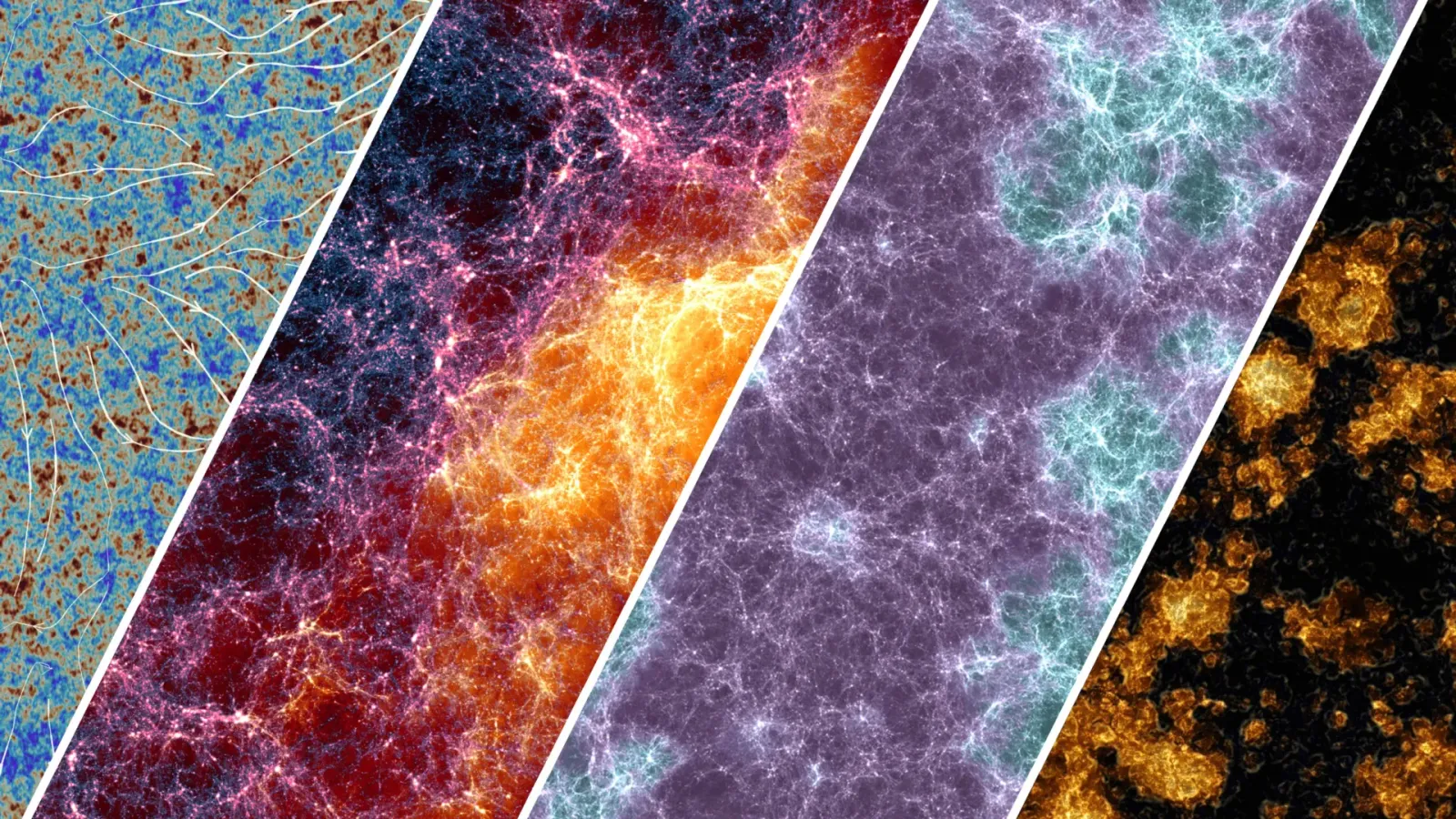
Researchers reported on November 12, 2026 a supercomputer simulation called Lumina that recreates 2 billion years of early cosmic history, from the dark age through the formation of stars and galaxies. Developed by researchers at MIT, Harvard University and other institutions, it covers a region about 1.6 billion light-years wide and was published in the Monthly Notices of the Royal Astronomical Society. The article says it captures hydrogen and helium re-ionization together, which it describes as the first simulation to do so, and it reports that early stars and galaxies appear to have driven hydrogen re-ionization while feeding supermassive black holes supplied the radiation for helium. The simulation follows dark matter, gas, stars and radiation, and it builds on the earlier IllustrisTNG simulation with about 30 times its resolution over a volume 100 times larger than previous leading simulations. It ran on Frontier at Oak Ridge National Laboratory in Tennessee. The researchers are making Lumina available so its predictions can be compared with observations from existing and future telescopes, which could help explain how the first galaxies and stars formed.