Updated
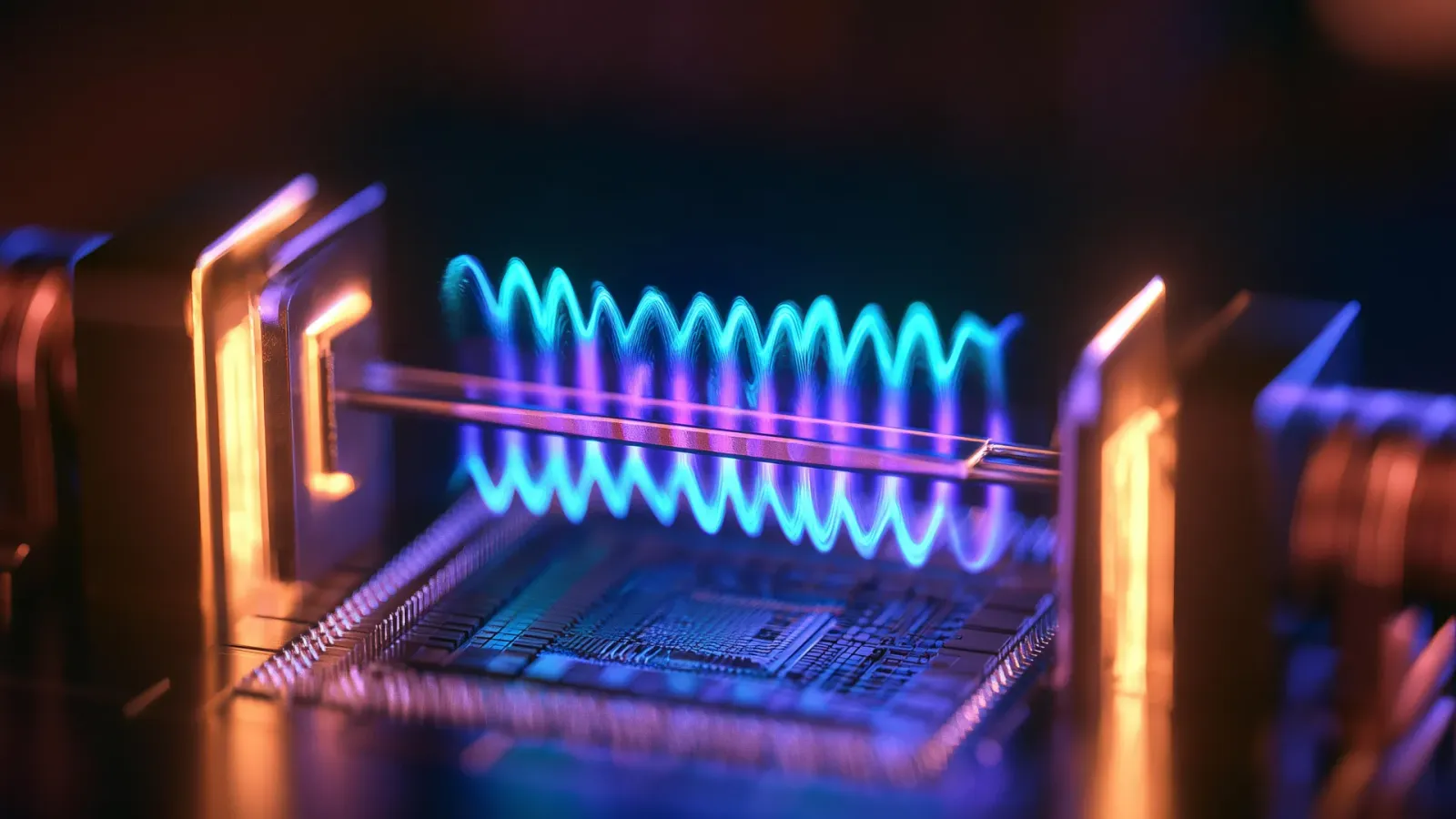
Researchers at ETH Zurich, led by physicist Yiwen Chu, have built a quantum computer that stores information in microscopic mechanical vibrations rather than electromagnetic memory, as described in the journal Science on November 12, 2026. The design borrows from conventional computers, pairing a superconducting qubit that acts as the processing and control unit, like a CPU, with a separate quantum memory, like RAM, that holds information during calculations. Information is held in patterns of vibration in tiny mechanical resonators, which the processor accesses, modifies and returns to memory. The team says the approach could address key difficulties in quantum computing. Electromagnetic memory can take up considerable space, making larger machines hard to build, while mechanical resonators are substantially smaller, can support many vibration patterns for storing more information, and may keep quantum states for longer before they fade. The researchers tested the system with the quantum Fourier transform and period finding, two fundamental techniques that require coordinating multiple quantum states with precision, and reported that the work is the first experimental demonstration that mechanical resonators can work with superconducting qubits to carry out quantum computations.