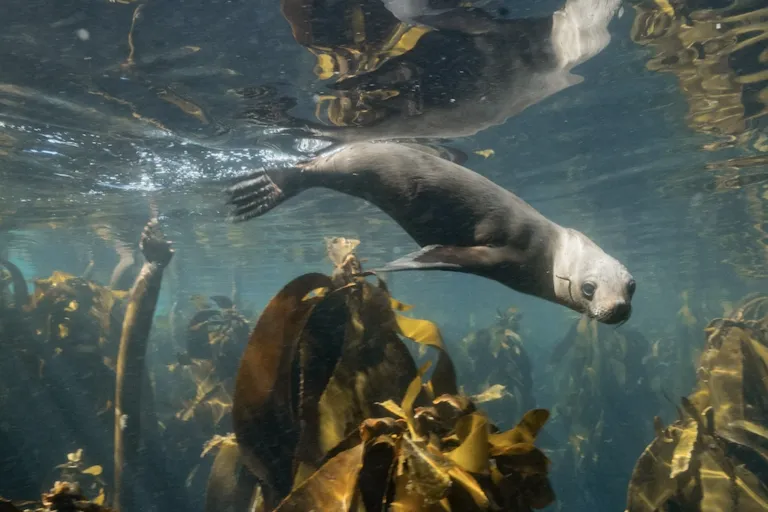
Updated
Mongabay published a commentary on November 12, 2026 arguing that kelp forests need their own name, separate from seaweed, to strengthen their conservation. It opens with the world's only floating bamboo kelp forest, where a tuberculate cuttlefish escapes a predator by releasing ink shaped like its own body. Kelp forests fringe about a third of the world's coastlines and are probably as biologically important as rainforests, yet less than 2% are meaningfully protected. The commentary warns that warming water could wipe out up to 25 million hectares of kelp by 2050. The Great African Seaforest, stretching more than 1,300 kilometers from South Africa to Namibia, is one example. The author argues that kelp loses out in policy because it is grouped with red, brown and green algae as seaweed, and that no global legal or policy instrument focuses on kelp. A 2023 policy brief found kelp receives the least global attention, with mangroves cited 43 times for each kelp mention. Tasmania and northern California have each lost 95% of their kelp forests, and Sussex, England, has lost 96%. Mangroves, by contrast, are 42% protected and have an international day, which the commentary credits with embedding them in public awareness. It calls for a kelp day, storytelling, funding and monitoring, and points to the Kelp Forest Challenge, which aims to restore a million hectares and protect three million by 2040 and has three government signatories so far.