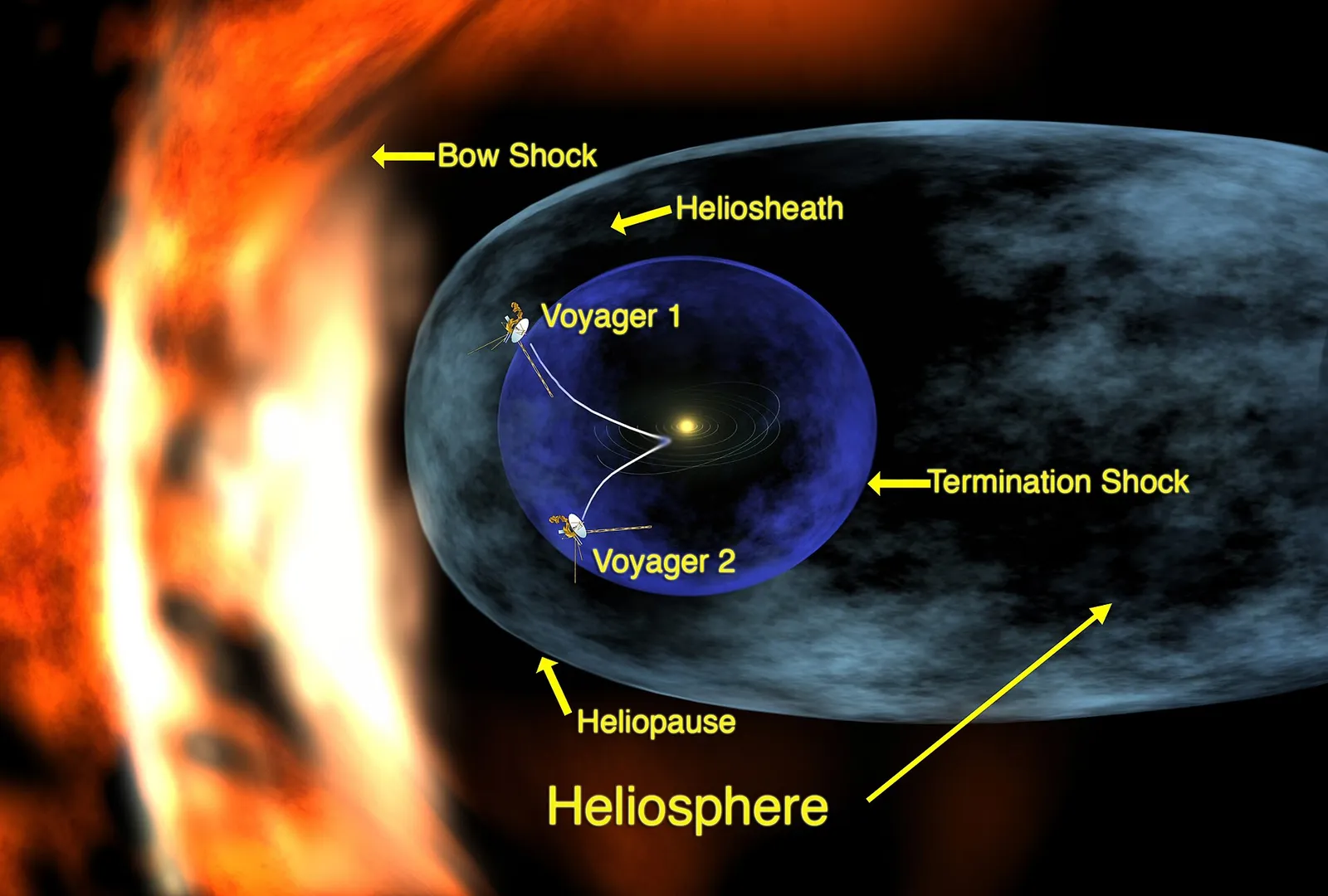
NASA/Walt Feimer · Public domain · Wikimedia Commons
Updated
NASA received a signal from Voyager 1 on Thursday, 19 November 2026, after the probe reached one light-day from Earth. The signal arrived exactly 24 hours after it was sent, France 24 reported, and the probe, launched in 1977, is more than 26 billion kilometres away, the farthest any human-made object has ventured. NASA's heliophysics division director Joe Westlake said in a statement that "Traveling a light-day is a singular feat for a spacecraft, but Voyager is so much more than a distant traveler." Voyager 1 passed Jupiter in 1979, Saturn in 1980 and crossed into interstellar space in 2012. Its twin, Voyager 2, is NASA's other long-running mission and is not expected to reach the one-light-day mark until 2035. JPL director Dave Gallagher called the milestone "yet another historic feat." No science or engineering data have been received from Voyager 1 since Saturday, although its carrier signal kept arriving and helped confirm the distance, and controllers are trying to determine why the data stopped.