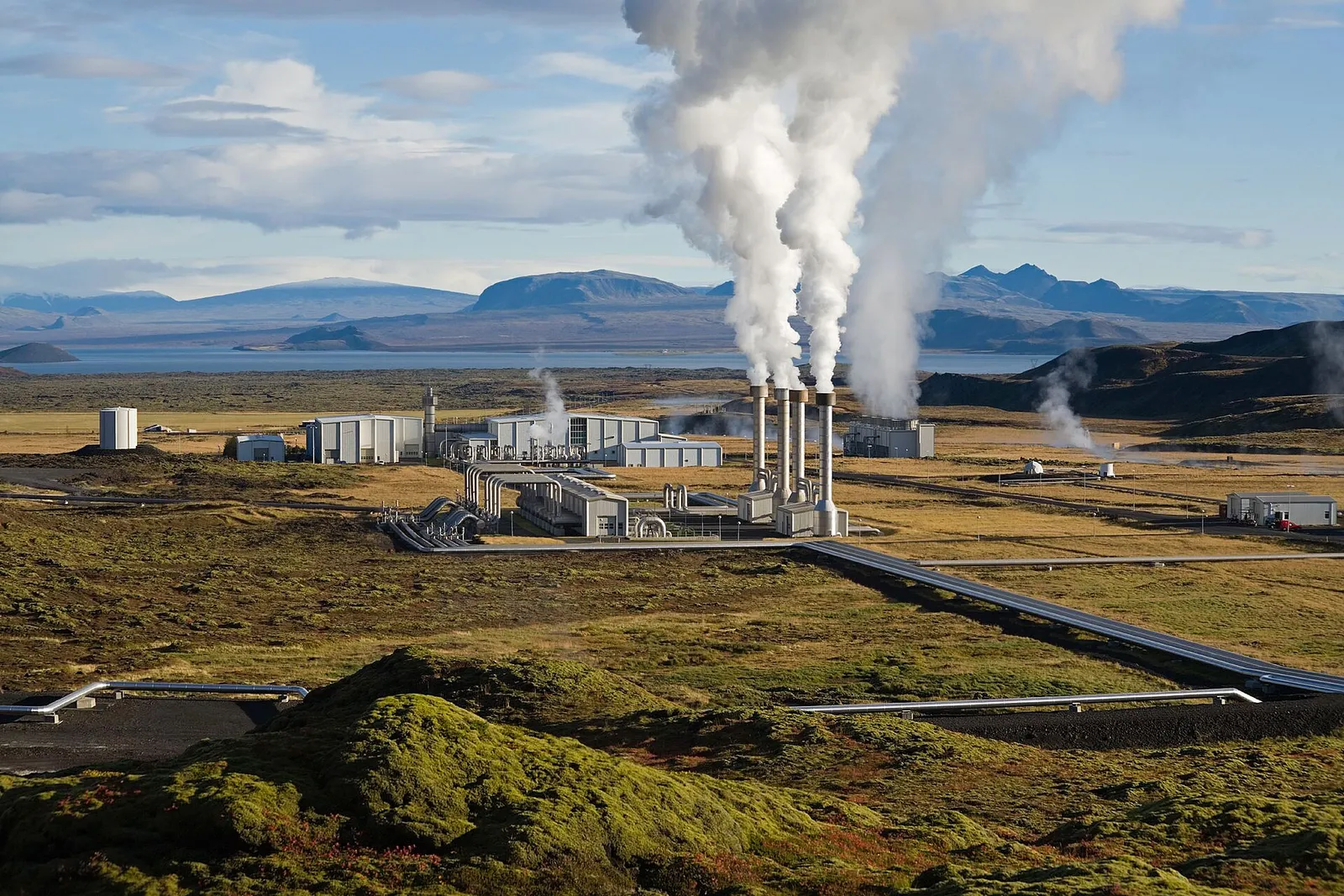
Gretar Ívarsson – Edited by Fir0002 · Public domain · Wikimedia Commons
Updated
New geothermal startups say super-hot rock could supply terawatts of electricity almost anywhere, which TechCrunch reported on November 20, 2026, as a possible answer to data centers' energy needs. The startups aim to tap water that becomes supercritical at extreme depths, where a single well could generate 15 megawatts or more. Quaise Energy said it had signed Google as a customer, and Google said it would pay more than $500 million for 50 megawatts from a Quaise project in central Oregon that would reach heat three miles deep. Quaise plans to use a gyrotron to vaporize rock below about 2.5 miles, hoping to make drilling under those conditions cost-effective. Mazama Energy, backed by Khosla Ventures, said it had found a way to keep its drill bits cool using carbon dioxide in a technique it calls Carbon Chill. Its CEO, Sriram Vasantharajan, told TechCrunch that the company's second well was drilled 80% faster than its first and that the cooling method cut drilling time another 20%. TechCrunch described these as early results and did not describe independent tests. XGS Energy received a Department of Energy grant to develop materials and models for reliability at those depths. Drilling accounts for roughly a quarter to a third of a geothermal plant's costs, so both companies are betting that deeper, hotter wells will yield more power per well. Quaise has raised more than $270 million and Mazama $171 million, according to the report.