Image: ScienceDaily
Updated
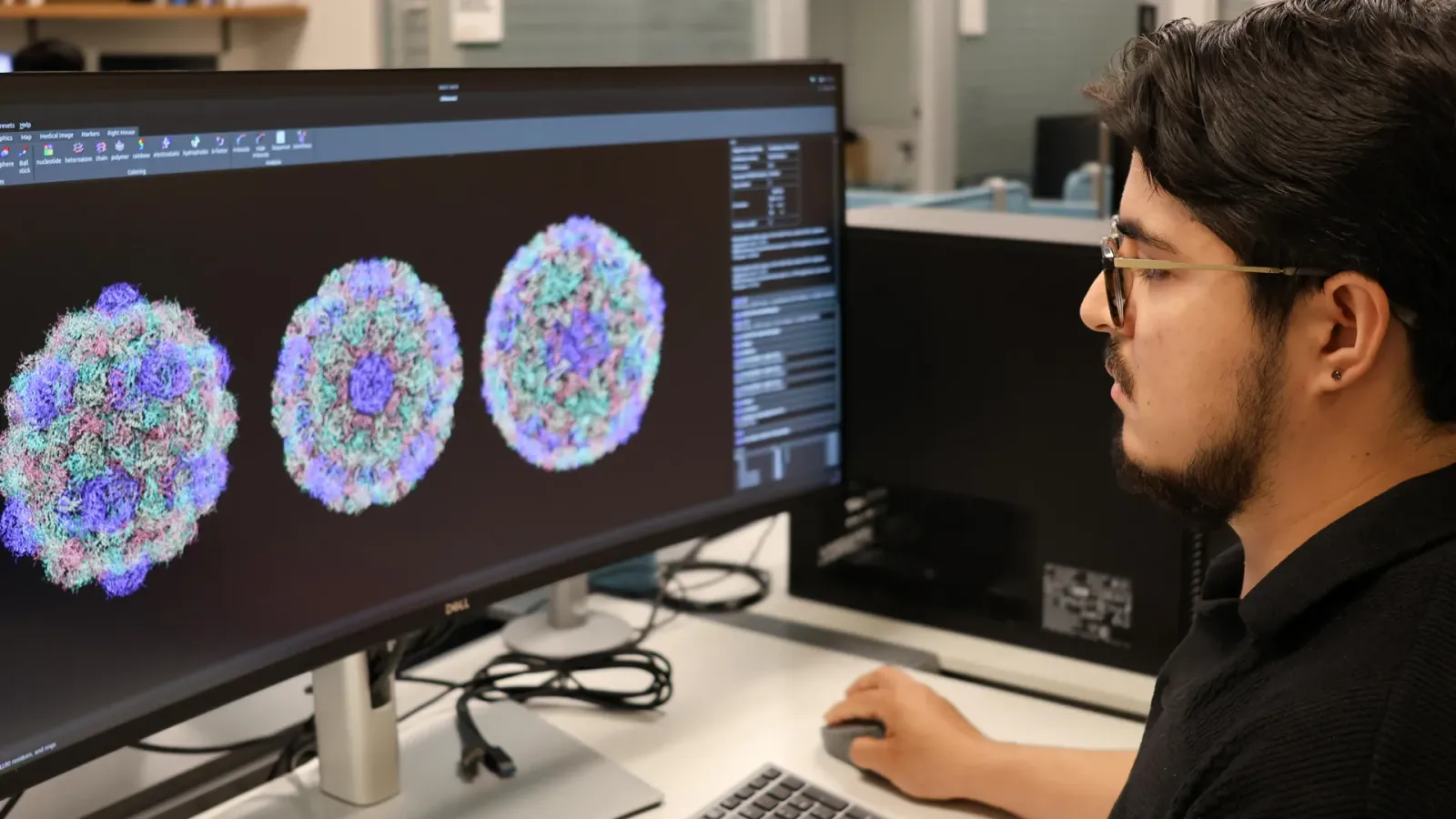
University of Miami researchers have identified a previously unknown group of viruses that may help explain how encapsulins, tiny protein compartments inside cells, and viruses are evolutionarily related. ScienceDaily reported that the study, published in Nature Communications, challenges the conventional view that encapsulins evolved from viruses, suggesting the two may have repeatedly evolved from one another over millions of years. The team, led by Abelardo Aguilar, a Ph.D. student, and senior author Antoni Luque Santolaria, an associate professor in the Department of Biology, searched large genetic databases of environmental DNA sequences rather than growing the viruses in a lab. They combined bioinformatics with artificial intelligence tools, including AlphaFold. The newly identified viruses have smaller, simpler genomes and traits of both viruses and encapsulins, making them possible intermediates. The researchers proposed that immature viral protein shells, called procapsids, could link the two structures and might support biochemical reactions as well as genetic functions. ScienceDaily reported that the findings suggest scientists may need to study non-infective viral particles, though the authors say further research is needed to confirm these functions.