Image: NASA, public domain
Updated
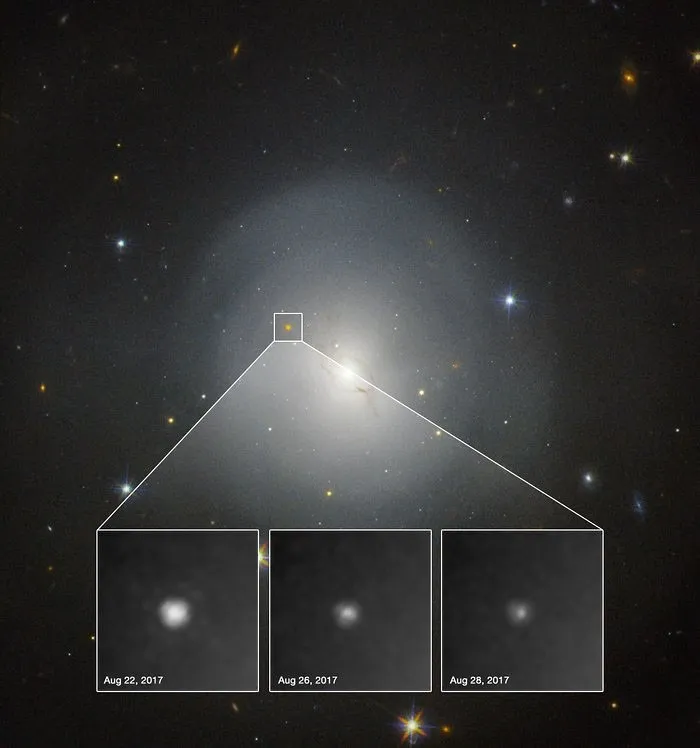
NASA invited amateur astronomers with telescopes and cameras to help find and track kilonovas, brief flashes from colliding neutron stars, in a November 24, 2026 post. Kilonovas forge much of the universe's gold and platinum and fade within days, so observers must find them quickly. NASA's Kilonova Catcher project links more than 150 registered volunteers on several continents into a rapid-response network. When gravitational wave detectors or space telescopes send alerts, volunteers point their telescopes at the sky to track the fading light, and the network also follows gamma-ray bursts. Volunteers work alongside professional astronomers, have contributed to more than 64 official reports shared through NASA's General Coordinates Network, and have been named authors on peer-reviewed papers. The project is co-led by Cristina Andrade of the Minnesota Institute for Astrophysics and Principal Investigator Damien Turpin of the French Alternative Energies and Atomic Energy Commission (CEA). The network is preparing for thousands of alerts from NASA's Nancy Grace Roman Space Telescope. Anyone with a telescope and camera can register at kilonovacatcher.in2p3.fr or by emailing kilonovacatcher@gmail.com.