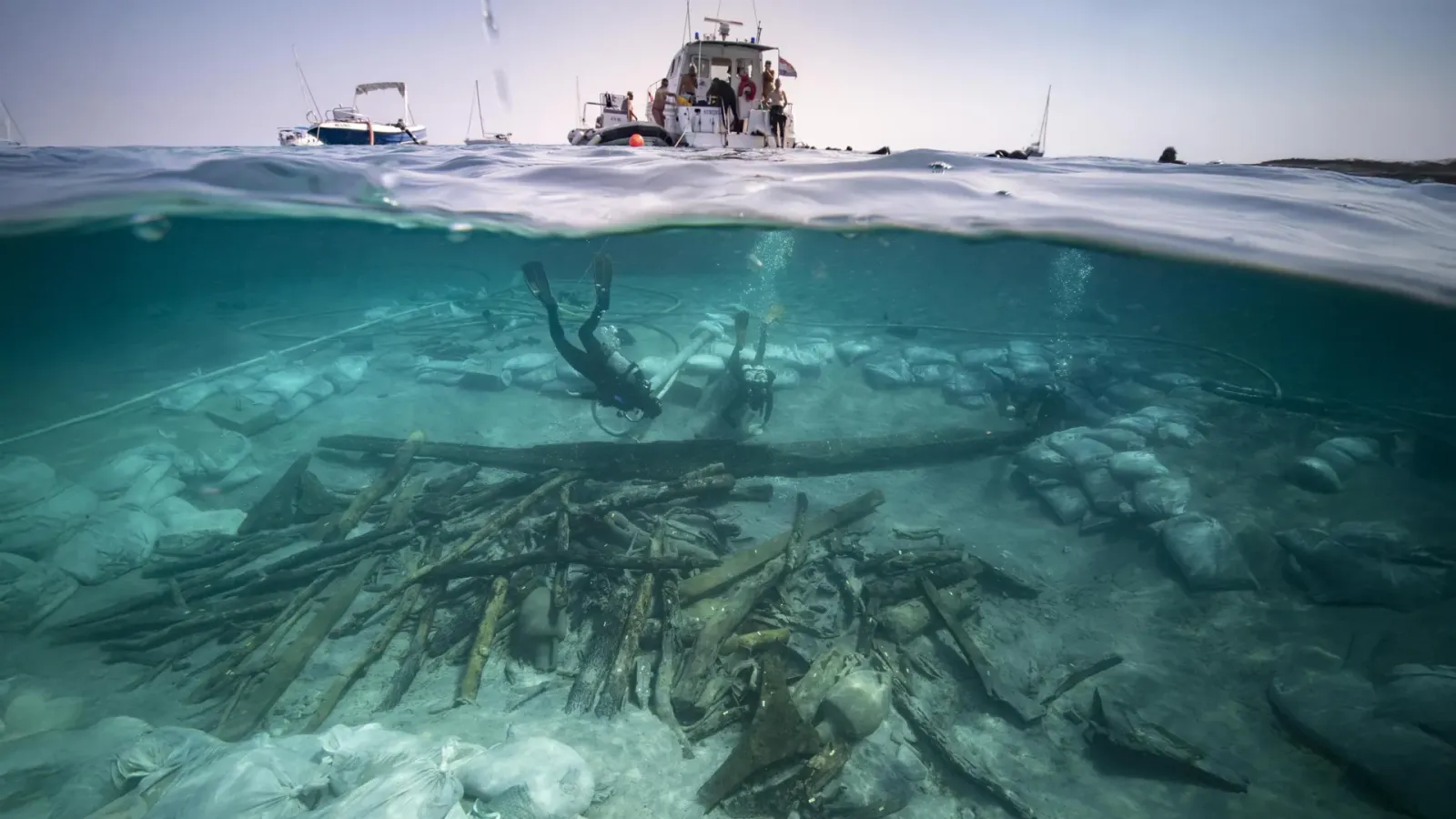
Image: ScienceDaily
Updated
A 2,200-year-old Roman shipwreck off Croatia is revealing how its builders waterproofed the vessel with pine tar and beeswax, according to a new study. The study, published in Frontiers in Materials, was carried out by researchers from France and Croatia on the wreck, Ilovik-Paržine 1, which sank about 2,200 years ago and dates to the Roman Republic. The team analysed 10 samples of the ship's protective coating. Most were pitch from heated conifer resin, but one contained a mixture of pine tar and beeswax, which Greek shipbuilders called zopissa. The beeswax made the coating more flexible and easier to apply while hot, a useful property for wooden timbers that flexed in waves. Dr Armelle Charrié, the first author and an archaeometrist in Strasbourg, said organic waterproofing materials have received little attention in archaeology. Microscopic pollen grains trapped in the sticky coatings are helping scientists reconstruct where the vessel may have travelled and where it was built or repaired. The pollen pointed to a varied range of landscapes, including Mediterranean and Adriatic coastal areas with holly oak and pine, shrubland with olive and hazel, alder and ash growing near rivers or coasts, and smaller amounts of fir and beech suggesting mountains such as those of Istria and Dalmatia. ScienceDaily reported that the distribution of the materials suggests the vessel likely received four or five distinct batches of waterproofing. The study is the first to combine molecular analysis with ancient pollen examination to determine both the coating ingredients and the vegetation nearby when they were made or applied.