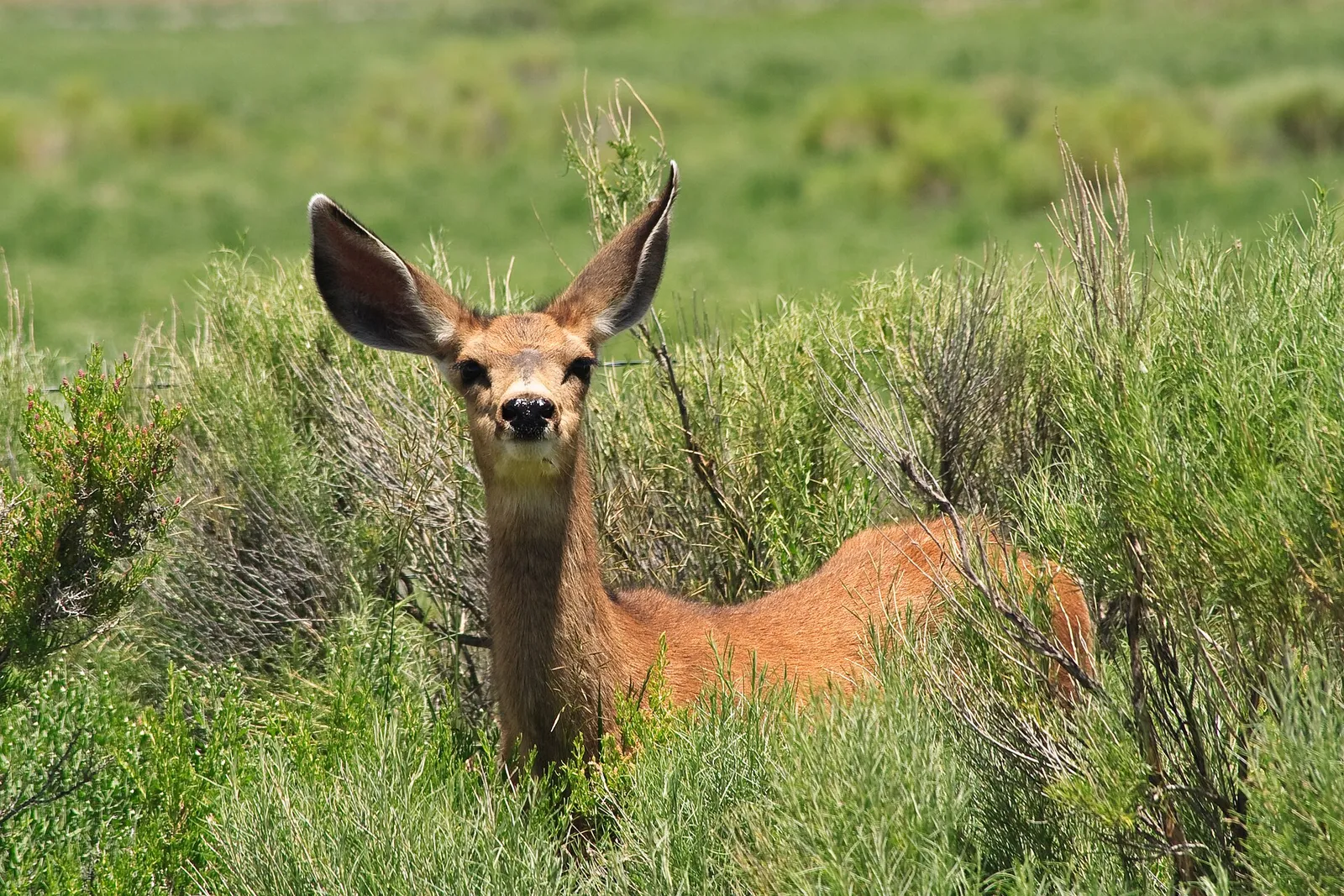
Calibas · CC BY-SA 3.0 · Wikimedia Commons
Updated
Wyoming's mule deer make some of the longest land migrations in the lower 48 states, and NPR reported that development and climate change are threatening those routes. The deer cover about 300 miles a year in small groups along paths likely used for millennia. Roads, fences, subdivisions and buildings force them through a maze, while more intense droughts in the Western U.S. limit their food. Research suggests the deer may be able to adapt to unpredictable seasons, but development is limiting that ability. Wyoming protects migratory corridors and restricts development in the most crucial paths, and landowners and conservation groups are preserving open lands and working ranches. The state's mule deer population was more than 500,000 in 1990 and is now about half that. This year, researchers with the Wyoming Migration Initiative tracked about 100 deer with GPS collars, and one deer migrated more than 240 miles one way. Matt Kauffman, a wildlife biologist with the U.S. Geological Survey and the University of Wyoming, said, "We are in this little race to map the migrations and figure out what tools we need to keep those landscapes open." Severe winters have killed thousands of deer in the state, and roughly 7,600 vehicle collisions with wildlife are documented each year, more often involving mule deer than any other species.