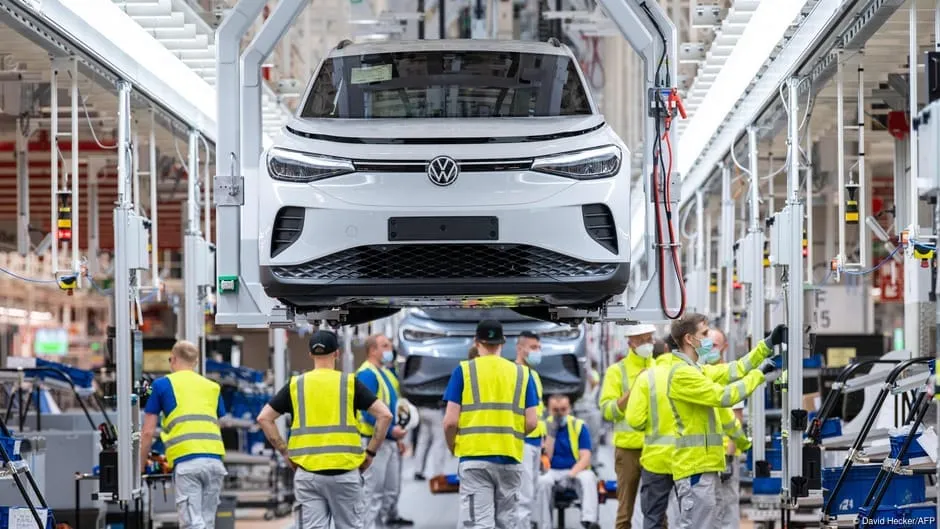
Image: Deutsche Welle
Updated
German auto workers, who enjoyed large pay gains during the industry's boom years, are now being asked to trade those gains and other benefits for job security, Deutsche Welle reported on 25 November 2026. Negotiations between unions and Volkswagen began on a Tuesday, with Volkswagen seeking a two-year wage freeze, cuts to allowances and bonuses, and longer hours for the same pay, while Mercedes is also seeking longer hours and both companies threaten to hold back investment in German factories. Unions have responded with warning strikes and threats of larger walkouts. Germany's auto industry lost more than 123,000 jobs between 2019 and 2025, according to the Ifo Institute. Deutsche Welle reported that the long-standing cooperative model between management and labor is under strain as Volkswagen abruptly cancelled labor agreements in 2024 and later proposed closing four German plants, with labor having earlier accepted cuts in exchange for job security through 2030. Management now argues that production should move to lower-wage locations, which labor researcher Thomas Haipeter said cancels the old compromise. The 35-hour workweek, won by IG Metall in 1984, is the most sensitive issue, with analyst Ferdinand Dudenhöffer saying unions cannot easily give it up. Volkswagen declined to comment for the article.