Image: Deutsche Welle
Updated
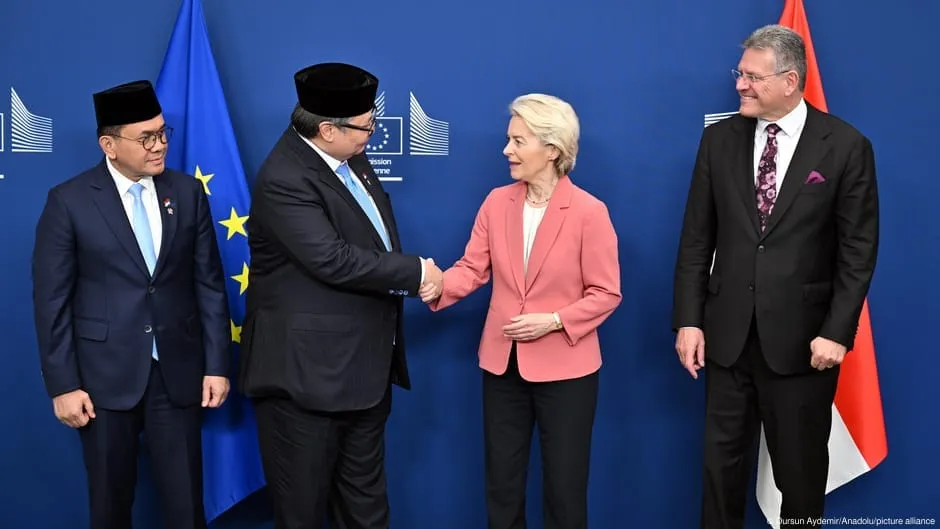
The European Union and Indonesia signed a trade agreement in Brussels last week, which European Commission President Ursula von der Leyen called one of the bloc's most ambitious deals in the region, linking markets of 730 million people. The agreement is aimed at opening new export and investment opportunities for Jakarta and Brussels. It will gradually scrap tariffs on more than 98% of product categories over 15 years, covering almost the entire value of bilateral trade, and is the culmination of nearly a decade of negotiations. Deutsche Welle reported that for the EU the deal offers better access to critical raw materials, particularly nickel used in batteries and electric vehicles, and a way to reduce dependence on China, while opening European investment in electric vehicles, electronics and pharmaceuticals. For Indonesia, the government wants to move beyond exporting raw materials by building domestic processing industries. The CSIS economist Yose Rizal Damuri estimated Indonesian exports could rise around 60% in coming years, with labor-intensive sectors such as textiles, garments, footwear and furniture among those that could benefit, while Andalas University economist Syafruddin Karimi said producers must meet European traceability and labor standards. Analysts also warned that expanded nickel mining, palm oil production and steel output could worsen pollution and deforestation without stronger safeguards, and that EU deforestation rules could burden smallholder farmers.
Show Brussels on the map