Image: ScienceDaily
Updated
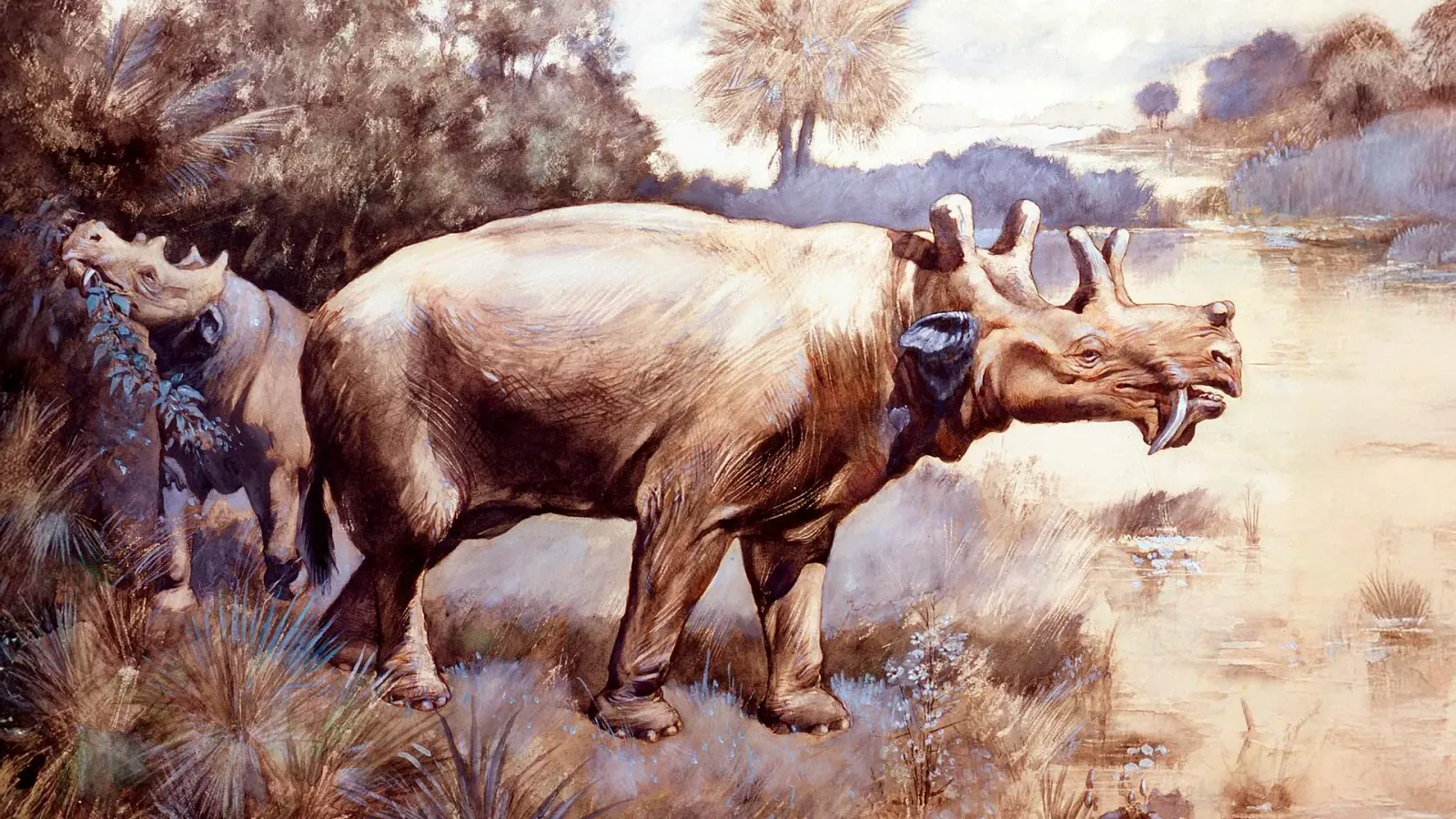
University of Kansas researchers reported in PLOS One that giant horned uintatheres, which emerged about 58 million years ago, may have differed far less between the sexes than long assumed. The work began with a broken fossil molar from Montana that Kevin Mulcahy and his adviser K. Christopher Beard were trying to identify, and it led Mulcahy to measure skulls at the American Museum of Natural History in New York. Uintatheres had long been treated as a textbook case of sexual dimorphism, marked by enormous bodies, prominent horns and oversized canine teeth. Mulcahy's skull measurements did not split into the two distinct groups that strong dimorphism would predict, and his dataset of about 30 skulls of Uintatherium anceps showed only weak hints of sex differences. Because the sex of fossil specimens cannot be determined directly, Mulcahy tested his methods on modern bison, whose sexes could be classified with confidence, and found much clearer differences there, suggesting the weak uintathere signal was not merely a statistical limitation. Mulcahy said the variation he saw did not appear binary, and he believes historical cultural attitudes may help explain why many extinct species described in the late 19th and early 20th centuries were read as strongly dimorphic. ScienceDaily reported the findings on November 27, 2026.
Show New York on the map